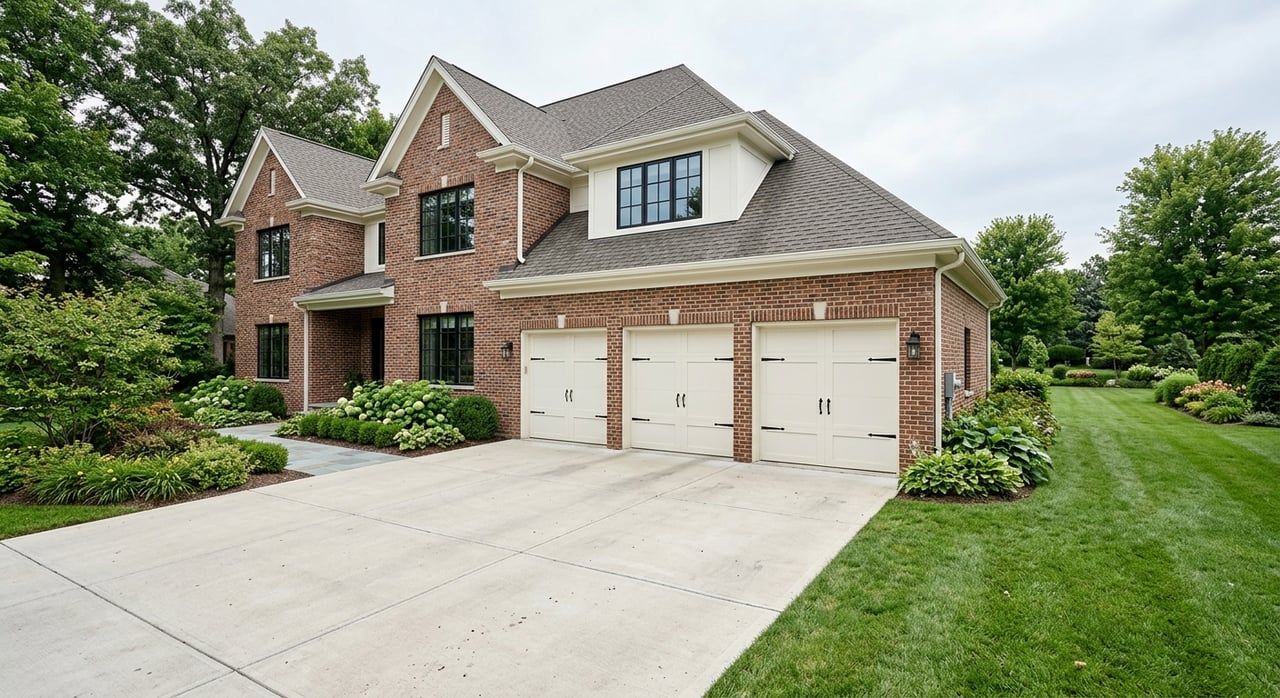
Need more room to spread out in Naperville? You are not imagining it. In a city that is nearing build-out, larger lots, extra garage bays, and more usable yard space are harder to find than many buyers expect. If you want a home that gives you more breathing room, it helps to know where space tends to show up, what listing details actually matter, and which trade-offs come with it. Let’s dive in.
Why larger lots are limited in Naperville
Naperville is a large, established suburb with 153,337 residents, 58,188 housing units, and a median housing value of $579,200. According to the city’s 2025 housing analysis, Naperville is rapidly approaching build-out, which means developable land is limited and property values have been pushed higher.
For you as a buyer, that creates an important reality: larger lots are not the default product here. Bigger yards, more garage space, and homes with more physical separation from neighbors tend to be premium features rather than standard inventory.
Where more space tends to appear
If your goal is more land, it helps to start with how Naperville developed over time. The city’s Land Use Master Plan explains that older residential areas often follow a traditional street grid with smaller lots, while newer neighborhoods from the past four decades tend to have a more suburban layout with curving streets, courts, and cul-de-sacs.
In practical terms, that means your search for more space will often begin in newer subdivisions and in estate-style or edge-of-city parcels. These areas are more likely to offer the lot patterns that support bigger yards, wider driveways, and additional garage capacity.
Newer subdivisions often offer more yard
Citywide, 54.8% of Naperville’s housing stock was built between 1980 and 1999. By comparison, only 3.5% of the housing stock predates 1950, and just 3.9% was built since 2010.
That matters because much of the space-oriented inventory is likely to be found in late-20th-century neighborhoods. If you are looking for a larger lot, you may have better odds in established newer subdivisions than in very old in-town areas or in limited new construction.
Estate and lower-density districts matter
Naperville’s zoning classifications include low-density single-family, estate, and agricultural districts. These are useful categories to pay attention to when your priority is lower density and more land.
Zoning does not tell you everything about a property, but it gives you an early signal. If space is your top priority, the zoning district can help you narrow your search before you get attached to a listing based on photos alone.
Downtown homes can be large without large lots
Downtown-adjacent areas can still offer substantial homes, but often through teardown and rebuild activity rather than through originally oversized lots. Naperville’s Downtown2030 plan notes that surrounding neighborhoods saw significant teardown activity starting in the late 1990s, with older modest homes replaced by larger single-family homes.
That creates an easy mistake for buyers. A big house near downtown may look like it offers more space, but the lot itself may still be relatively compact. If your real goal is outdoor room or future expansion potential, lot size matters as much as the house itself.
How to search smarter for more space
One of the best ways to search in Naperville is to separate three different ideas: lot size, interior square footage, and garage count. They often overlap, but they are not the same thing.
A larger home does not automatically give you a larger yard. A 3-car garage does not automatically mean more usable outdoor space. If you want room for entertaining, storage, a future pool, or an addition, you need to evaluate each of those features separately.
Focus on lot dimensions first
Naperville’s zoning code requires new lots to meet minimum area and width standards for their district. At the same time, a lot that was already of record before rule changes may still be developable if other requirements are met.
This is especially important in older neighborhoods, where lot layouts may predate current standards. The result is that two homes with similar appearances can have very different lot constraints behind the scenes.
Understand what zoning minimums reveal
For a concrete example, detached homes in the R1 district require at least 13,000 square feet of lot area and 85 feet of width. Detached homes in the R2 district require at least 6,000 square feet and 50 feet of width.
Those standards show why a listing photo can only tell you so much. If you are comparing two homes, the lot width and total area may tell you more about usable space and future flexibility than upgraded finishes or interior staging ever will.
Look past the photos
A lush backyard photo can make almost any property feel expansive. But what really matters is the recorded lot size, lot width, and how much of that land is actually usable after setbacks and other restrictions are applied.
If you are serious about finding more space, ask for exact lot details early. That simple step can save you time and help you avoid homes that feel large online but do not deliver the physical room you need.
What affects usable yard space
Not every square foot of a lot can be used the way you might expect. In Naperville, setbacks and accessory-structure rules can affect what you can build or add later.
The city states that detached accessory buildings may be placed in rear or interior side yards, but they must remain at least 5 feet from rear or interior side lot lines. In residential districts, accessory buildings are also limited to 18 feet in height.
Buildable envelope matters
This is where the concept of a buildable envelope becomes important. Even if a lot looks generous on paper, setbacks, easements, and placement rules can reduce the part of the property that is actually available for a future garage expansion, pool, fence, or addition.
If you are buying with long-term plans in mind, this step matters. A home with a slightly smaller lot but better usable dimensions may fit your goals better than a larger lot with more constraints.
Trade-offs that come with more space
In Naperville, more space often comes with trade-offs. The right move depends on how you weigh convenience, home age, and future flexibility.
Commute and convenience
Naperville is served by two Metra stations on the BNSF line, one near downtown and one on Route 59. Pace also provides weekday bus and on-demand service across major roadways in the city.
Even with those options, larger-lot homes may place you farther from a station, downtown amenities, or daily shopping. If your priority is room to spread out, you may need to accept a longer drive for errands or commuting.
Older areas may have added review layers
If you are considering an older in-town property, historic preservation rules may shape what comes next. Naperville’s local historic district includes 320 properties, and preservation standards are intended to keep improvements compatible in scale, style, building placement, and site access.
That does not mean older homes should be ruled out. It does mean you should ask more questions before assuming a future exterior change, addition, or garage project will be simple.
Larger-space homes usually sit in a premium tier
Space also tends to come at a higher price point. Naperville’s 2025 housing analysis cites a median list price of $472,000, while the city’s facts page lists a median housing value of $579,200.
Because larger lots, bigger floor plans, and extra garage bays are limited-product categories, they often compete in the upper half of the market. If you are searching for more land, it helps to plan for that pricing reality from the start.
Questions to ask before you buy
When you tour homes with more space, your best questions are usually about legality and flexibility, not just square footage. A polished presentation can be appealing, but your long-term use of the property depends on details that are often less visible.
Use this checklist to stay focused:
- What is the recorded lot size?
- What is the exact lot width?
- What zoning district is the property in?
- Is the parcel considered a lot of record?
- Are there setbacks or easements that limit future plans?
- Could historic-district rules affect exterior changes?
- Was the home expanded or rebuilt during a teardown cycle?
- How much of the yard is truly usable today?
These questions are especially useful in downtown-adjacent and older areas, where a large house may sit on a tighter or more constrained lot than you expect.
A practical way to compare homes
If you want to stay clear-headed during your search, compare homes in this order. Start with lot dimensions and zoning, then confirm how much yard is actually usable after setbacks, and only after that weigh commute and amenity trade-offs.
That sequence helps you focus on the property’s real physical capacity first. It also protects you from overvaluing cosmetic finishes when your true priority is more land, more flexibility, and more room to live well.
If you are targeting larger-lot homes in Naperville, a discreet and informed search strategy matters. The right property is rarely just the biggest house on the screen. It is the one that aligns the lot, the layout, and your future plans in a way that truly gives you more space.
When you are ready to refine your search with a more tailored approach, Jill Clark can help you evaluate space, privacy, and long-term fit with clarity and care.
FAQs
Where are larger lots most commonly found in Naperville?
- Larger lots in Naperville are more often found in newer neighborhoods, estate-style areas, and edge-of-city parcels rather than in older grid-style neighborhoods near the core.
Do bigger homes near downtown Naperville usually come with bigger lots?
- Not necessarily. In downtown-adjacent areas, some larger homes were created through teardown and rebuild activity, so the home may be large while the lot remains relatively compact.
What should you check first when buying a larger-lot home in Naperville?
- Start with the recorded lot size, lot width, and zoning district, because those details often reveal more about usable space and future options than the home’s interior size alone.
Why does zoning matter for larger-lot homes in Naperville?
- Zoning matters because minimum lot area, lot width, setbacks, and accessory-building rules all affect how much space you actually have and what changes may be possible later.
Can a 3-car garage home in Naperville still have a small yard?
- Yes. Garage count, house size, and lot size are separate features, so a home can have extra garage space without offering much usable yard.
Are larger-lot homes in Naperville usually more expensive?
- Often, yes. Because larger lots and extra space are limited-product categories in a built-out market, they typically compete in the upper half of Naperville’s housing market.