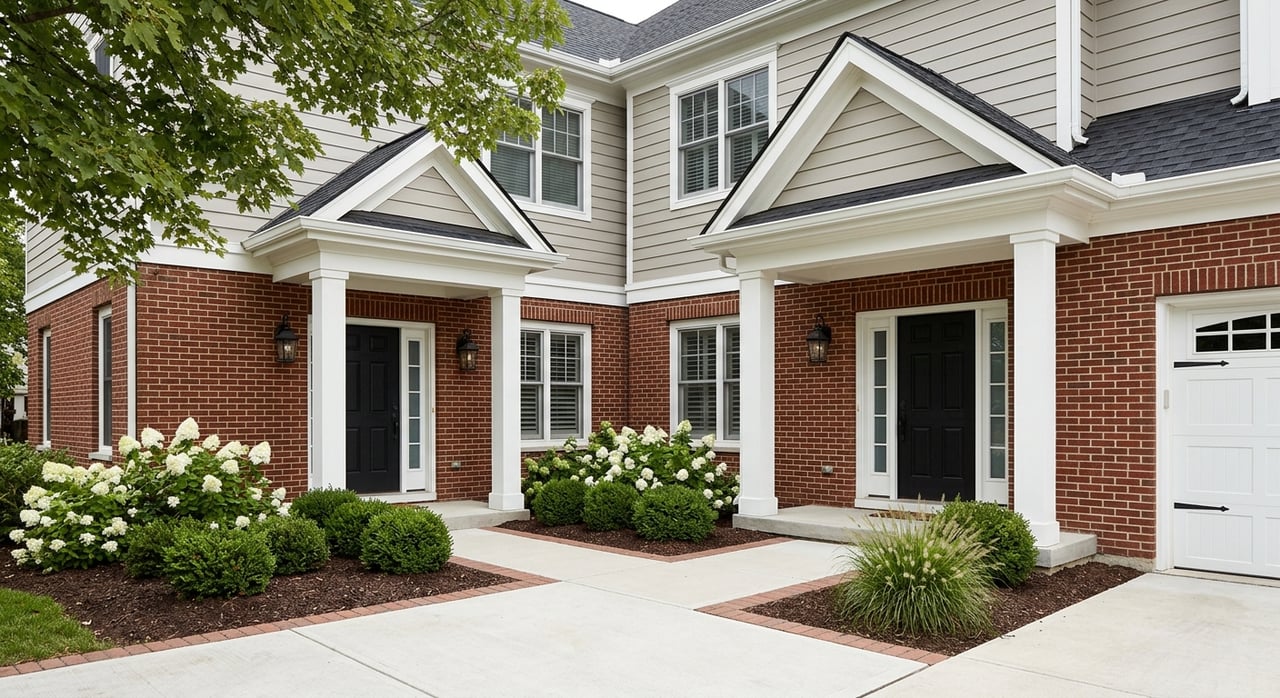
Wondering whether a condo or townhome is the right fit in Naperville? You are not alone. For many buyers, the choice comes down to balancing price, upkeep, location, and day-to-day convenience. This guide will help you compare your options so you can make a confident move in Naperville’s attached-home market. Let’s dive in.
Why Attached Housing Stands Out in Naperville
Naperville is still mainly a detached-home market, but attached housing plays an important role for buyers who want a different lifestyle or a lower price point. The city’s housing snapshot shows 63.8% of homes are single-family detached, while 12.3% are duplex or townhome properties. That makes condos and townhomes a meaningful, but smaller, slice of the local market.
That smaller inventory matters because attached homes can offer a strong entry point in a city where housing values are high. Naperville reports a median housing value of $579,200, and MRED’s May 2026 update shows a trailing-12-month median sales price of $340,000 for attached single-family homes compared with $700,000 for detached homes. In simple terms, attached housing can open the door to Naperville living without stretching as far into detached-home pricing.
Attached homes are not standing still in this market, either. MRED reports 84 attached homes for sale at month-end, an average market time of 37 days, and sales at 98.5% of original list price. So while condos and townhomes may be more affordable than detached homes, they are still competitive.
Condo vs. Townhome Basics
What a Condo Usually Means
A condo often fits buyers who want a more convenient, lower-upkeep lifestyle. In many condo communities, exterior maintenance and shared systems are handled through the association structure rather than by each owner individually.
Under Illinois condominium law, unit owners pay a proportionate share of common expenses, and condo budgets must provide reasonable reserves for capital expenditures and deferred maintenance on common elements. That means you may do less hands-on exterior work, but you are still paying for building upkeep through association dues and shared budgeting.
What a Townhome Usually Means
A townhome often feels more house-like while still offering some maintenance relief. That can make it appealing if you want a bit more separation or layout flexibility without taking on the full cost and responsibility of a detached home.
In Illinois, though, the word townhome does not tell you everything. The Illinois Common Interest Community Association Act can apply to attached or detached townhomes, villas, and even single-family homes. What really matters is what the declaration and bylaws say about maintenance, insurance, parking, and shared expenses.
Why the Documents Matter More Than the Label
In Naperville, two townhomes may offer very different ownership experiences. One association may cover exterior maintenance, landscaping, snow removal, and parts of the roof, while another may shift more responsibility to the owner.
That is why the listing description should never be your only guide. The real answer lives in the governing documents, financial statements, and association rules. If you are deciding between a condo and a townhome, this is one of the most important parts of the process.
How Lifestyle Should Shape Your Decision
Choose a Condo for Convenience
A condo may be the better fit if your top priorities are simplicity and location. In Naperville, that often means easier access to downtown, nearby transit, and a stronger lock-and-leave lifestyle.
The city describes downtown Naperville as pedestrian friendly and historic, with hundreds of stores and dining opportunities. The Riverwalk adds 1.75 miles of paths, bridges, fountains, art, and gathering spaces. If you want to spend more time enjoying the area and less time worrying about exterior upkeep, a condo may align well with that goal.
Choose a Townhome for Middle Ground
A townhome often works well if you want some of the ease of attached living but still prefer a more traditional home feel. It can be a smart middle-ground option for buyers who want maintenance relief without giving up as much privacy or space.
This matters in Naperville because attached housing often serves buyers who want to avoid reaching all the way into detached-home pricing. If your goal is to stay in Naperville while keeping your purchase more manageable, a townhome may strike the right balance.
Compare Detached Homes Honestly
A detached home is usually the better fit if you place the most value on privacy, yard space, and fewer shared rules. It gives you more control, but in Naperville it also usually comes with a much higher price tag.
This is the tradeoff many buyers face. You are often choosing between more privacy and autonomy on one hand, and lower upkeep and a lower entry price on the other. Neither is universally better. It depends on how you want to live.
Five Questions to Ask Before You Buy
1. What Does the Association Maintain?
Start with the practical side of ownership. Ask what the association is responsible for and what you would still need to handle yourself.
This is especially important in Naperville’s mature housing stock. The city’s snapshot shows that 54.8% of housing was built from 1980 to 1999, and only 3.9% has been built since 2010. In many attached communities, building age makes long-term maintenance planning a major factor.
2. Are the Reserves and Finances Healthy?
Illinois law gives prospective buyers access to key association information before purchase. That includes the declaration, rules, unpaid assessments, anticipated capital expenditures, reserve or replacement fund status, financial statements, pending suits, and insurance coverage.
This information can tell you a lot about the stability of a community. A great floor plan can lose some appeal quickly if the association has weak reserves or major upcoming expenses with no clear funding plan.
3. How Will Parking Work Day to Day?
Parking can shape your daily experience more than many buyers expect. You should understand whether the home includes a garage, assigned spaces, guest parking, or any permit requirements.
This matters even more near downtown and transit. Naperville has three public parking decks, more than half a dozen surface lots, and about 3,000 public spaces overall. Downtown residents and employees can also obtain no-cost CBD permits for non-time-limited spaces, while overnight parking at train stations is only allowed in limited windows on weekends and city holidays.
4. Will the Location Improve Your Routine?
Location is often the biggest lifestyle divider in attached housing. A condo or townhome near downtown or near a Metra station may support a more convenient routine than a larger home farther out.
Naperville says Metra BNSF service runs through stations near downtown Naperville and Route 59, with Pace Bus and Amtrak also available. If you value commuting ease or want more car-light living, exact location matters more than whether the listing says condo or townhome.
5. How Updated Is the Community?
Because much of Naperville’s housing stock is older, condition should be part of your decision from the start. The finishes inside a unit matter, but so do the roof, common systems, exterior materials, and the association’s long-term maintenance approach.
A beautifully updated interior does not tell the whole story. In a mature community, the better question is whether the unit and the association have both kept pace with maintenance and capital needs.
A Simple Way to Decide
If you want the easiest lifestyle, strong convenience, and a lower-maintenance setup, a condo may be the right match. If you want a more home-like feel while still keeping some shared maintenance, a townhome may fit better.
If you want maximum privacy, outdoor space, and fewer shared rules, you may still prefer a detached home. In Naperville, though, that choice usually means stepping into a much higher price tier.
The best decision is the one that fits your real routine, not just your wish list. When you compare maintenance, association health, parking, commute, and overall value together, the right answer often becomes much clearer.
If you are weighing condo, townhome, or detached options in Naperville, Jill Clark can help you compare the numbers, the lifestyle tradeoffs, and the fine print so you can move forward with confidence.
FAQs
Is a condo in Naperville usually more affordable than a detached home?
- Yes. MRED’s May 2026 local market update shows a trailing-12-month median sales price of $340,000 for attached homes versus $700,000 for detached single-family homes in Naperville.
What should you review before buying a Naperville condo or townhome?
- You should review the association declaration, rules, unpaid assessments, anticipated capital expenditures, reserve or replacement fund status, financial statements, pending suits, and insurance coverage.
Does a Naperville townhome always mean less maintenance for the owner?
- No. In Illinois, the ownership experience depends on the association’s declaration and bylaws, not just the word townhome in the listing.
Why does parking matter when buying an attached home in Naperville?
- Parking rules can affect everyday convenience, especially near downtown or train stations, where permits, guest parking, and overnight parking limits may come into play.
Is walkability important when choosing a Naperville condo or townhome?
- Yes. Buyers who want easy access to downtown, the Riverwalk, dining, or Metra service should focus closely on exact location because walkability varies a lot within Naperville.